What Is Digital Transformation?
Published by Capitol Technology Solutions | Data Analytics | Business Intelligence | IT Strategy
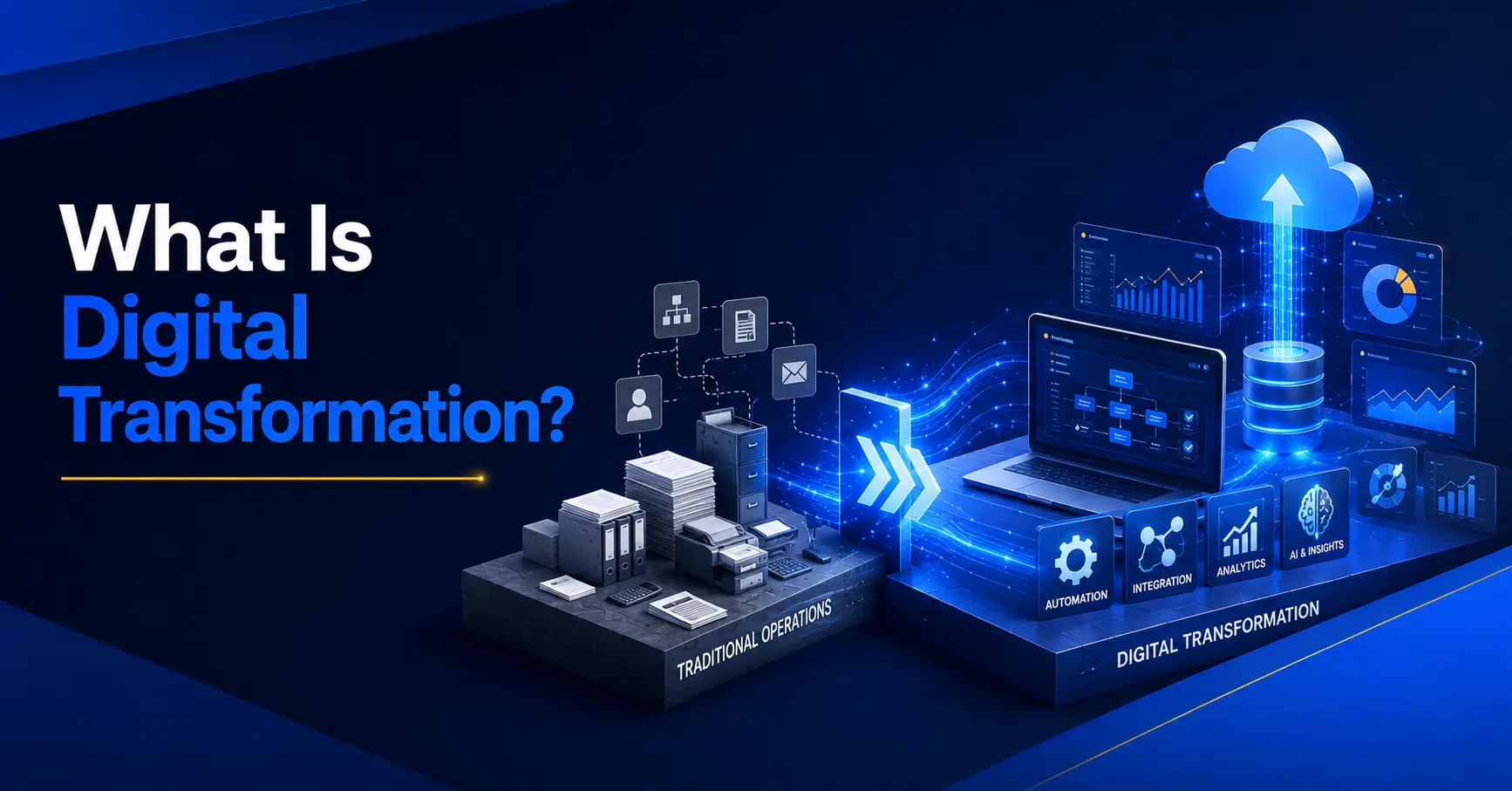
Digital transformation is the process of using technology to improve how a business operates and delivers value.
Common improvements include:
● Replacing outdated hardware and software
● Moving selected systems to the cloud
● Automating repetitive tasks
● Connecting separate business applications
● Improving access to data
● Supporting secure remote work
● Strengthening cybersecurity
The focus should remain on business outcomes. A company does not transform simply because it moves files to the cloud or purchases a new application.
Real transformation occurs when technology makes a process faster, more secure, easier to manage, or more useful to customers and employees.
For example, an automated approval workflow can shorten turnaround time and create a reliable record. Connecting sales and accounting platforms can remove duplicate data entry.
Customers expect fast, convenient services. Employees need reliable access to information, and leaders need accurate data for decisions.
Outdated technology can limit the ability to meet these expectations. It can create:
● Slow and inconsistent processes
● Frequent downtime
● Higher maintenance costs
● Weak security controls
● Limited support for remote work
● Poor access to business data
● Difficult customer experiences
● Problems scaling operations
Modernization can increase productivity, reduce errors, and make it easier to respond when customer needs or business priorities change.
Signs Your Business Needs to Modernize
A business may need a modernization plan when:
● Employees repeatedly enter the same data
● Important approvals depend on email
● Teams struggle to find current documents
● Critical software is outdated or unsupported
● Systems do not share information
● Reports require hours of manual work
● Remote employees cannot access tools reliably
● Customers face slow or confusing processes
● Growth is creating more administrative work
Together, these issues may show that the technology environment no longer supports the business.
Steps for a Successful Digital Transformation
A clear process helps the business modernize without creating unnecessary cost or disruption.
1. Assess Your Current Technology
Begin by documenting the existing environment. Review hardware, software, networks, cloud services, security controls, vendors, and support arrangements.
Also examine workflows and ask employees about slow systems, repeated tasks, missing information, and unofficial workarounds. This identifies which systems provide value and which create risk or frustration.
2. Define Business Goals
Technology choices should follow business needs.
Instead of setting a broad goal such as “move to the cloud,” define the result the business needs. This might be faster client onboarding, better reporting, or less downtime.
Clear goals make it easier to compare solutions and measure results. They also prevent the organization from investing in technology that does not solve a meaningful problem.
3. Prioritize High-Impact Improvements
Trying to modernize everything at once can overwhelm employees and increase risk.
Prioritize projects based on business value, urgency, cost, and difficulty. Security weaknesses and unsupported systems may require immediate attention. Other improvements can be introduced in phases.
A strong first project should solve a visible problem and produce a measurable result.
4. Modernize the IT Foundation
New applications cannot perform well on an unreliable foundation.
Review network capacity, internet connectivity, devices, identity management, backups, and support. Correct weaknesses that could affect cloud platforms, collaboration, automation, and secure access.
5. Choose the Right Cloud Strategy
Cloud transformation can improve flexibility, remote access, and scalability. However, moving every system to the cloud is not always the right answer.
Review each application based on security, performance, cost, compliance, integration, and user needs. Some may remain on-site or become part of a hybrid environment.
Cloud services also require management. User access, configurations, backups, licenses, and costs should be reviewed regularly.
6. Connect Systems and Automate Workflows
Many businesses already have useful applications, but those applications operate separately.
Integration allows approved information to move between systems. A completed sale could create a project, notify the service team, and prepare billing information. Automation can also route requests, send reminders, and update records.
Automation should begin with repetitive, rules-based tasks. Employees should remain involved when work requires judgment, approval, or personal communication.
7. Improve Data Management
Digital transformation depends on accurate and accessible information.
Define where data is stored, who owns it, who can access it, and how long it is retained. Correct duplicate or incomplete records before moving them into new systems.
Centralized dashboards and reporting tools can then give leaders a clearer view of performance, customer activity, workloads, and costs.
Better data supports faster decisions, but only when employees trust its accuracy.
8. Build Security Into Every Change
Modernization can introduce new risks if security is considered only after implementation.
Every project should address access, authentication, encryption, device security, backups, monitoring, vendors, and incident response.
Businesses should also choose products with strong default protections and clear update practices. CISA’s Secure by Design guidance encourages
technology manufacturers to make customer security a core product requirement.
Security should support the new workflow without creating unnecessary barriers for employees.
9. Prepare and Train Employees
Employees determine whether new technology succeeds.
Explain why the change is happening and how it will affect daily work. Invite employees to test new processes before wider deployment.
Training should use real examples from each role. Short guides, demonstrations, and follow-up support are often more effective than a single long training session.
Employee resistance may reveal a design problem. If a new process is confusing or adds work, the solution may need to be adjusted.
10. Measure Results and Continue Improving
Digital transformation is an ongoing process.
Measure each project against its original business goal. Useful measures may include:
● Time required to complete a process
● Number of manual steps removed
● Error rates
● System availability
● Customer response time
● Employee adoption
● Security incidents
● Technology costs
Use the results to guide the next project and keep technology aligned with changing needs.
Common Digital Transformation Mistakes
Common mistakes include:
● Buying technology before defining the problem
● Attempting too many changes at once
● Ignoring employee feedback
● Moving poor processes into new software
● Failing to clean data before migration
● Underestimating integration requirements
● Treating cybersecurity as a final step
● Providing limited training
● Failing to measure business results
Avoiding these mistakes requires coordination between leadership, employees, IT professionals, and vendors. Modernization is a business initiative, not an isolated IT project.
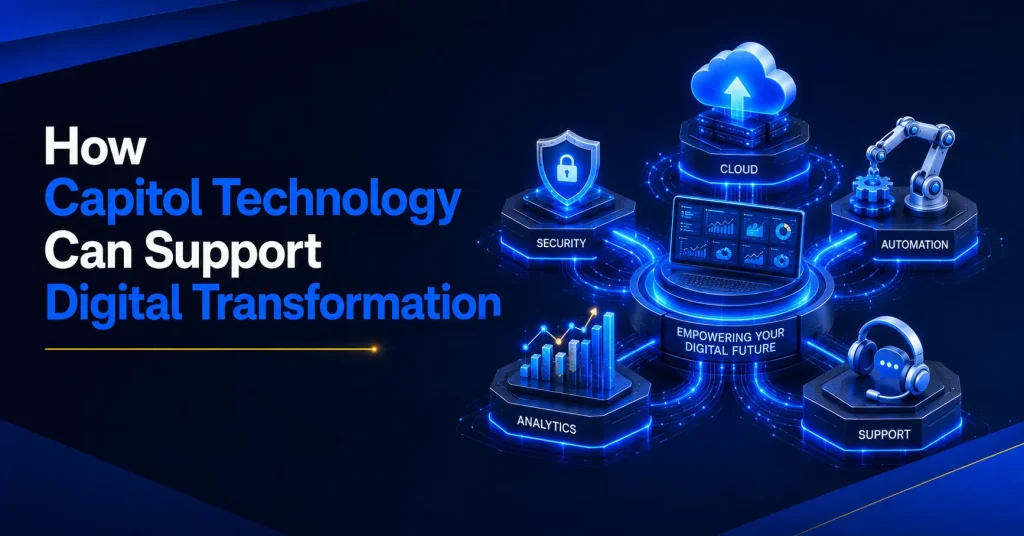
How Capitol Technology Can Support Digital Transformation
Capitol Technology helps businesses assess their current environments and plan improvements around real operational needs.
The process may begin with an IT audit to identify outdated systems, security weaknesses, performance issues, unnecessary costs, and gaps between technology and employee workflows.
Capitol Technology can then support network improvements, cloud adoption, cybersecurity, software selection, system integration, custom software, and ongoing managed IT services. Each recommendation is based on the organization’s goals, budget, existing investments, and growth plans.
This structured approach helps businesses modernize in manageable stages while maintaining reliable daily operations.
Conclusion
Digital transformation is not about following every new technology trend. It is about creating a business that can operate efficiently, serve customers effectively, and adapt when conditions change.
The process begins with an honest assessment and clear goals. Businesses can then strengthen their technology foundation, modernize selected systems, connect information, automate repetitive work, improve security, and prepare employees for change.
The strongest digital transformation strategy focuses on measurable business value. Each project should solve a real problem and create a foundation for the next improvement.
Ready to modernize your business? Contact Capitol Technology to assess your current environment and create a practical digital transformation roadmap.
Frequently Asked Questions
What Is Digital Transformation?
Digital transformation is the use of technology to improve business processes, employee workflows, customer experiences, decision-making, and long-term adaptability.
Does Digital Transformation Require Moving Everything to the Cloud?
No. A business may use cloud, on-premises, or hybrid systems. The right choice depends on security, performance, compliance, cost, and operational requirements.
How Long Does Digital Transformation Take?
The timeline depends on the size of the business and the scope of change. A phased strategy allows the organization to complete high-priority projects first and improve other areas over time.
How Should a Business Start Its Digital Transformation?
Start with a technology and workflow assessment. Identify the most important operational problem, define a measurable result, and select a focused first project.