Technology for Competitive Advantage: How to Leverage IT for Business Success
Technology supports communication, information, customer service, payments, and daily work. However, simply having technology does not create an advantage.
Many businesses use the same tools as their competitors. The difference is how well those tools support company goals.
Without a plan, technology can create disconnected systems, repeated work, rising costs, and security gaps. In contrast, a strong IT strategy improves operations, customer service, decisions, and growth.
Using technology for competitive advantage means treating IT as a business resource. Therefore, every decision should connect to a real need and measurable result.
This guide explains how businesses can use IT more strategically and build a practical path toward long-term success.
What Does Technology for Competitive Advantage Mean?
Technology for competitive advantage is the strategic use of IT to help a business perform better than other organizations in its market.
The advantage may come from:
● Completing work faster
● Providing more reliable service
● Reducing operating costs
● Making better use of data
● Protecting customer information
● Responding quickly to change
● Creating a more convenient customer experience
● Supporting new products or services
Technology does not need to be unique. For example, one company may use a CRM as an address book, while another connects it with sales, service, and reporting. As a result, the second business gains clearer information and a more consistent process.
The competitive advantage comes from how the system is planned, connected, and used.
Why IT Strategy Matters for Business Success
Without a strategy, decisions become reactive. Applications are added separately, hardware is replaced after failure, and security improves only after an incident.
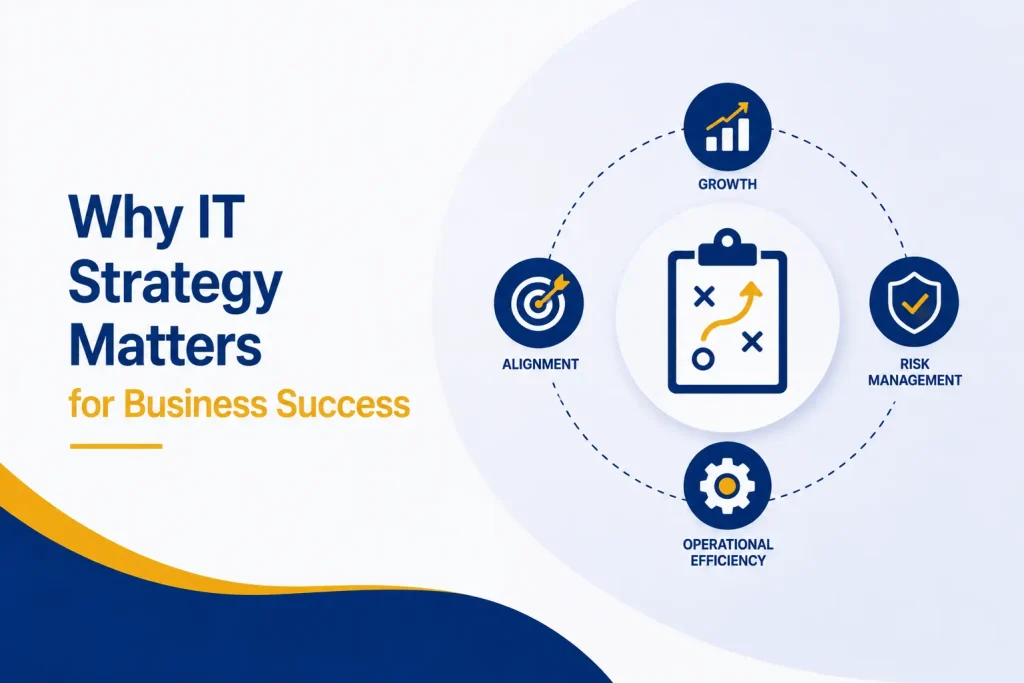
An IT strategy for business connects technology investments with company priorities. It helps leaders decide:
● Which systems are most important
● Which processes need improvement
● Where automation can provide value
● Which risks require attention
● What should be upgraded or replaced
● How technology should support growth
Moreover, a clear strategy improves budgeting because investments can be planned and measured.
Ways Technology Can Create a Competitive Advantage
1. Improve Employee Productivity
Employees lose time when systems are slow, information is difficult to find, or the same data must be entered more than once.
Integrated applications can move information between sales, accounting, and project-management systems. Likewise, automation can route approvals, send reminders, and update records.
Consequently, employees spend less time on administration and more time on valuable work. Even one improved process can save time across the organization.
2. Deliver a Better Customer Experience
Customers expect quick responses, consistent information, and simple ways to access services.
Customer portals, online scheduling, automated updates, and connected support systems can meet these expectations.
However, convenience should not replace human service. Technology should remove delays while keeping the right person accessible.
As a result, the business can build loyalty through both efficiency and personal support.
3. Use Data for Better Decisions
Businesses collect data through sales, finance, service, projects, and operations. Yet it often remains divided between systems.
Connected information gives leaders a clearer view of trends, delays, resource needs, and unnecessary spending.
Therefore, decisions can be based on current evidence instead of assumptions. Leaders can respond sooner and direct resources toward opportunities with the greatest value.
However, incomplete records can still lead to poor decisions.
4. Reduce Costs and Operational Waste
Technology can reduce repeated work, downtime, and resource costs.
For instance, a review may uncover unused licenses, while monitoring may find a problem before an expensive outage.
Nevertheless, the cheapest solution may create more work or lack essential security. The goal is long-term value.
5. Strengthen Cybersecurity and Trust
Customers and partners expect sensitive information to be protected. Therefore, cybersecurity affects trust and reputation.
Strong security may include authentication, endpoint protection, encryption, backups, access controls, training, and monitoring.
In addition, consider security when selecting software, designing workflows, and choosing vendors. Adding it later is more difficult.
The NIST Cybersecurity Framework 2.0 connects cybersecurity risk with organizational goals and governance. Security is a business responsibility, not only an IT issue.
6. Support Growth and Scalability
Processes may fail as the company adds employees, customers, locations, or services.
Cloud platforms, standardized onboarding, identity management, and connected applications can support growth without equal growth in complexity.
Furthermore, planning allows the business to add capacity without emergency changes.
7. Improve Flexibility and Resilience
Markets and customer expectations change quickly. Businesses need systems that help them respond.
Secure cloud access, tested backups, reliable communications, and recovery procedures support operations during disruption. Similarly, flexible applications make workflows easier to adjust.
Resilience does not prevent every problem. However, it reduces impact and speeds recovery.
8. Create New Services and Opportunities
Technology can do more than improve existing work. It can also support new ways of delivering value.
For example, a business may introduce a client portal, mobile service, online consultation, or subscription offering. Automation may also make a costly service practical.
Innovation should begin with a customer or operational need. Technology creates value only when people find it useful.
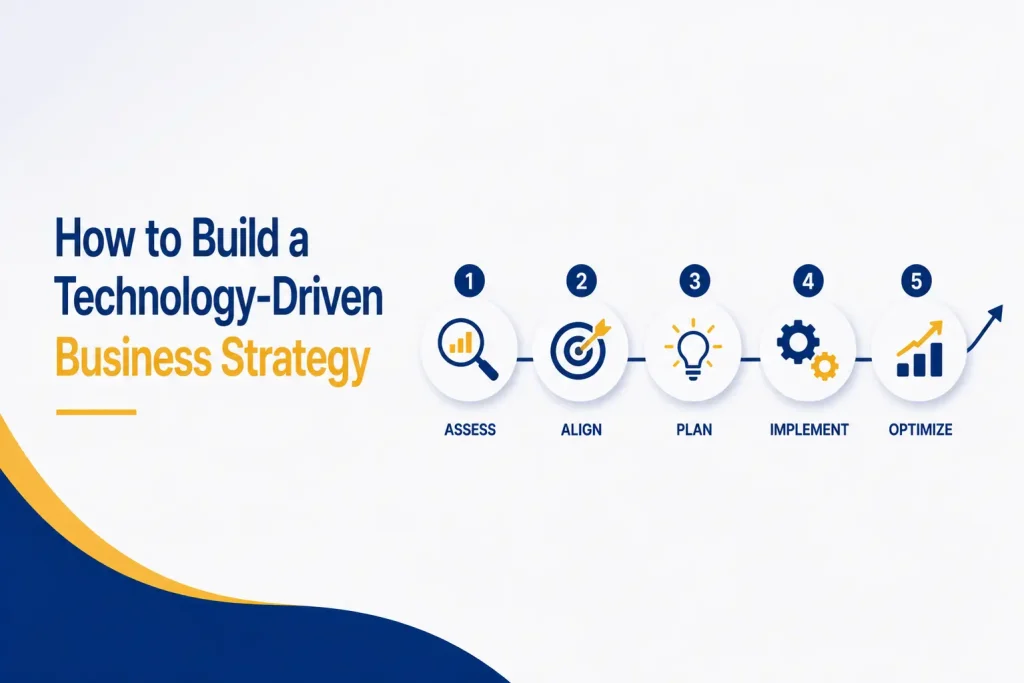
How to Build a Technology-Driven Business Strategy
A structured approach helps turn technology investments into business results.
1. Begin With Business Goals
Start by defining what the company wants to achieve. The goal may be faster growth, better customer retention, lower costs, improved security, or more efficient service delivery.
Next, identify where current technology supports or limits that goal. This prevents trend-driven purchases.
2. Assess the Current Environment
Review devices, applications, networks, cloud services, security, vendors, contracts, and workflows. Moreover, ask employees about problems that reports do not show.
The assessment should reveal what is working, what creates risk, and what needs improvement.
3. Prioritize High-Value Opportunities
Not every problem requires immediate action. Therefore, rank projects by value, urgency, cost, risk, and difficulty.
Address security weaknesses and unsupported systems first. Then focus on productivity, customer service, and growth.
4. Select Technology Around the Process
Define the improved process before choosing a product. Then compare usability, integration, security, support, cost, and scalability.
Otherwise, the business may purchase a system with many features but poor operational fit.
5. Implement Changes in Phases
A phased rollout reduces disruption and supports learning.
Begin with one department or process. Test, collect feedback, correct problems, and then expand.
Additionally, use clear communication and role-based training. Unused technology cannot create value.
6. Measure Business Results
Every project should have measurable outcomes. Depending on the goal, the business may track:
● Time saved
● Error rates
● System availability
● Customer response time
● Employee adoption
● Operating costs
● Sales conversion
● Security incidents
Compare results with the original goal. If value is missing, improve the process or reconsider the solution.
7. Review the Strategy Regularly
Technology, risks, and business priorities continue to change. Consequently, strategic technology planning should be an ongoing process.
Regular reviews help the company remove unused tools, address new risks, plan upgrades, and identify new opportunities before competitors do.
Common Mistakes to Avoid
Businesses often reduce the value of technology by:
● Buying tools without defining the business problem
● Adding software that does not connect with current systems
● Ignoring employee feedback
● Automating a poor process without improving it first
● Treating cybersecurity as a separate project
● Failing to provide training
● Measuring activity instead of business results
● Delaying upgrades until systems fail
Ultimately, technology should simplify the business rather than create more complexity.
How Capitol Technology Can Help
Capitol Technology’s managed IT services combine technology support, monitoring, security, maintenance, backup, and strategic guidance.
The process can begin with an assessment of the company’s systems, workflows, risks, and goals. From there, Capitol Technology can help prioritize improvements across infrastructure, cybersecurity, software, cloud services, and ongoing IT management.
This business-first approach helps organizations move beyond reactive support and use technology more strategically.
Conclusion
Technology for competitive advantage is not about owning the newest tools. It is about using the right systems to improve how the business operates, serves customers, manages risk, and grows.
First, the company needs clear goals. Next, it must assess its current environment and prioritize the improvements that offer the greatest value. Finally, it should implement changes carefully, train employees, and measure results.
When technology and business strategy work together, IT becomes more than operational support. It becomes a practical driver of efficiency, trust, resilience, and opportunity.
Ready to use technology more strategically? Contact Capitol Technology to assess your current environment and build an IT roadmap around your business goals.
Frequently Asked Questions
How Can Technology Create a Competitive Advantage?
Technology can improve productivity, customer service, decision-making, security, scalability, and resilience. The advantage comes from using it around clear business goals.
What Is an IT Strategy for Business?
An IT strategy is a plan that connects technology investments, risks, systems, and priorities with the organization’s wider business objectives.
Does a Small Business Need a Technology Strategy?
Yes. A simple strategy helps a small business control costs, reduce security risks, select suitable tools, and prepare technology for future growth.
How Often Should a Business Review Its Technology Strategy?
Review it regularly and after major changes in business goals, staffing, systems, regulations, security risks, or customer needs.